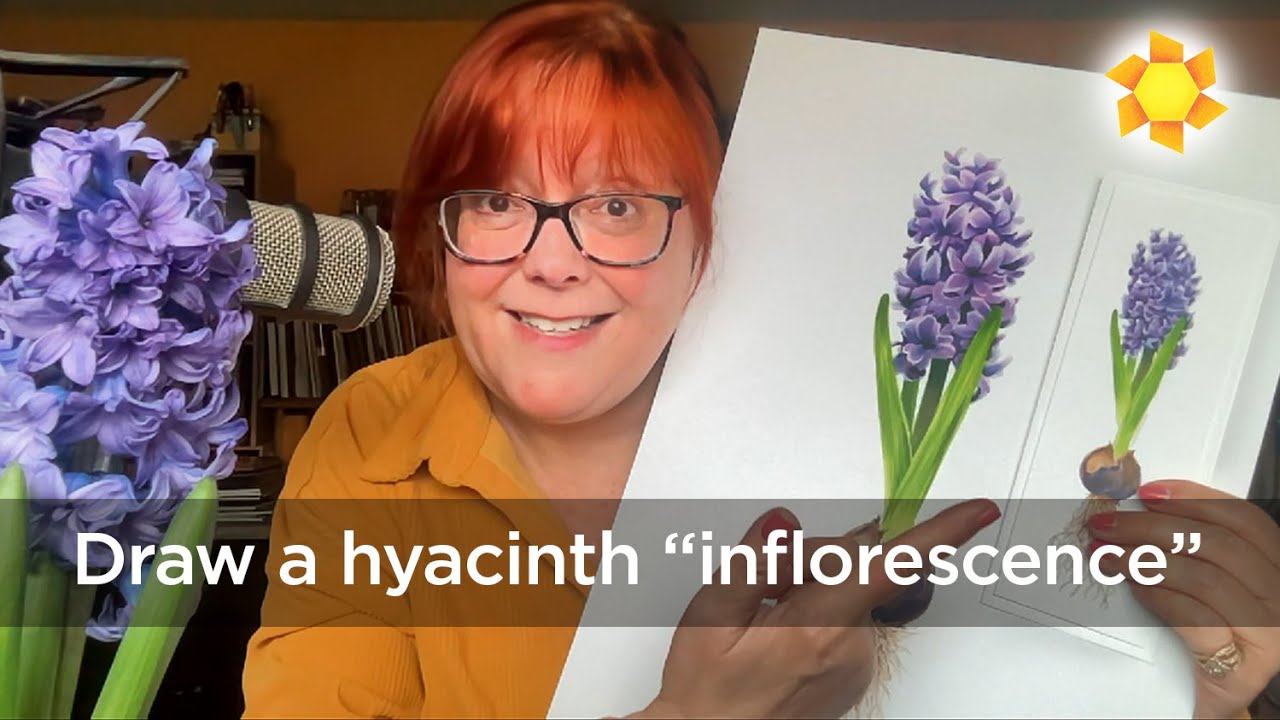
An inflorescence refers to the arrangement of flowers on a plant stalk, often presenting a complex and intricate structure. In botanical art, capturing the beauty of inflorescences poses unique challenges, requiring artists to overcome issues related to complexity, detail, and perspective.
Challenges of Drawing Complicated Stalks
A. Complexity of Inflorescence Structures
Inflorescences come in a variety of forms, ranging from simple clusters to elaborate spirals or panicles. The intricate arrangement of flowers and branches can make it difficult for artists to accurately depict the structure without losing clarity or precision.
B. Difficulty in Capturing Individual Flowers
Within a dense inflorescence, individual flowers may be tightly packed together, making it challenging for artists to distinguish and portray each bloom with clarity and accuracy. Maintaining the integrity of each flower while conveying the overall structure can be a daunting task.
C. Managing Proportions and Perspective
Ensuring that the proportions and perspective of the inflorescence are accurately represented on paper presents another hurdle for botanical artists. Perspective distortion can occur, especially in complex inflorescences with overlapping elements, requiring careful attention to detail and spatial relationships.
Techniques for Overcoming Drawing Issues
A. Breakdown the Structure into Components
To tackle the complexity of inflorescence structures, artists can break down the arrangement into its individual components, such as main stems, branches, and clusters of flowers. By focusing on one element at a time, artists can better understand the overall structure and accurately depict each component.
B. Focus on Observation and Detail
Observation is key to capturing the intricacies of inflorescences accurately. Artists should study the subject closely, paying attention to the arrangement of flowers, the direction of growth, and any unique characteristics. Detail is crucial in botanical art, and capturing the subtle nuances of each flower can elevate the realism of the illustration.
C. Utilize Light and Shadow for Depth
Light and shadow play a vital role in conveying depth and dimension in botanical illustrations. By carefully observing the interplay of light and shadow on the inflorescence, artists can create a sense of depth and volume, enhancing the three-dimensional quality of the drawing.
Tips for Enhancing Inflorescence Drawings
A. Experiment with Different Drawing Materials
Different drawing materials, such as graphite, colored pencils, or watercolors, offer unique properties and effects that can enhance inflorescence drawings. Artists should experiment with various mediums to find the one that best suits their style and the subject matter.
B. Practice Regularly and Seek Feedback
Like any skill, drawing inflorescences requires practice and persistence. Artists should dedicate time to regular practice sessions, honing their observation skills and refining their techniques. Seeking feedback from peers or mentors can also provide valuable insights and help artists improve their work.
C. Study Botanical Illustrations for Inspiration
Studying botanical illustrations from renowned artists can provide inspiration and guidance for aspiring botanical artists. Examining the techniques and approaches used by master illustrators can offer valuable insights into composition, technique, and botanical accuracy.
Conclusion
Drawing complicated stalks with lots of flowers, also known as inflorescences, presents unique challenges for botanical artists. However, by understanding the complexities of inflorescence structures and employing effective techniques, artists can overcome drawing issues and create stunning botanical illustrations that capture the beauty and intricacy of nature. With practice, patience, and experimentation, botanical artists can hone their skills and create artwork that inspires and captivates viewers.
❤❤❤
Trop belle ta jacinthe Sandy😊❤
What type of paper did you use?
Gorgeous Sandy, I can just imagine the fragrance as well ❤
I have an alcohol marker sketchbook and this will be my first artwork in it. Thank you!!
I learned so much in this video! I love listening to your though process and comments on what does and does not work. You speak at a nice pace and have a very easy voice to listen too. Love following your videos!
So so beautiful! I totally get how you see the detail so much better on a real flower. TFS
Shape of a Hyacinth, if people find it intimidating can be compared to a pinecone or the hanging purple lilacs depending on how you work; just ajust the pettal size to upright floral size. Think shapes; that way botanicals for beginners is not as complex as we like to think; bc each individual pettal on a hyacinth has four pettals when fully opened. Art is perception; don't make it more complicated for yourself if it takes the joy out of making art; you be you. Realism in art comes with practice; those are two different ballgames on itself.
Truly beautiful!
🙏🙏👍👍👍👍👍👍👍👍👍👍😍😍😍😍😍😍😍😍😍😍😍😍😍😍
Sandy this bulb looks like the union that was growing in my kitchen and the green that came out was velvety soft and slick wow learned a lot more today
yes i went to look at the easter flowers and you are so right thank you for the lovely purples and what you did with the leaf wow i can see this i got some flowers and i love them i needed those lovely colors
Beautiful! While I haven’t painted any tulips yet, you did inspire me to buy a bunch of tulips to brighten my home. I’ll be sure to study them each day to see how they look as the blooms open.
Your art is beautiful! Thank you for sharing💖
I couldn’t smell it until your beautiful painting! Ha ha! Love it!
Your job is so magnificent! Congratulations!
Beautiful! Your teaching and tutorials are terrific! ❤
Ooh the hyacinths on your desk are so beautiful. Lilacs we’re my mothers favorite bush I love them as well they come in white too. I have grape hyacinths growing on my grass, there are pink ones too! So many great choices. I love all your tips for how to draw them more realistically.
Beautiful, and thank you for sharing.
Hi Cally